0
0
Your shopping cart is empty.
Total: ${ $store.state.basket.data.itemSum | currency } (Gross) ${ $store.state.basket.data.itemSumNet | currency } (Net)
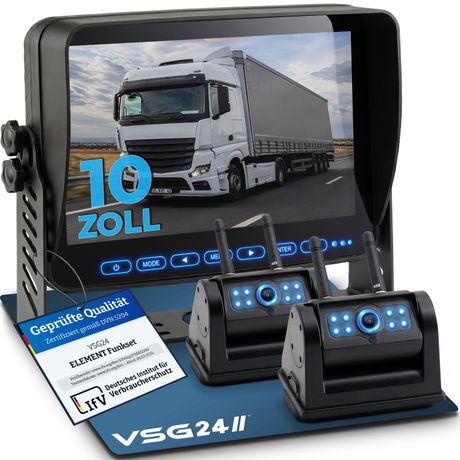 WIRELESS ELEMENT HD XL | 2CAM Battery power – maximum freedom





 WIRELESS ELEMENT HD XL | 2CAM High performance with battery operation
  WIRELESS ELEMENT HD XL | 4CAM Magnetically mounted – ready to go – fully protected

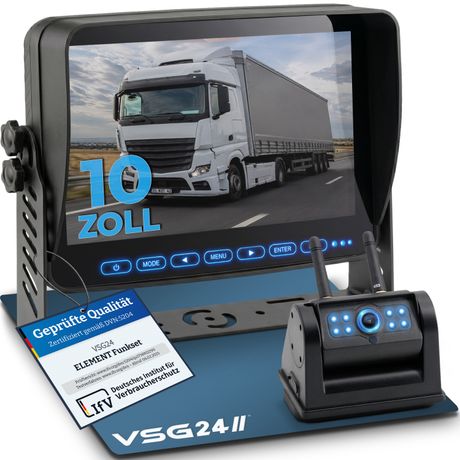 WIRELESS ELEMENT HD XL Flexible mounting for maximum control
 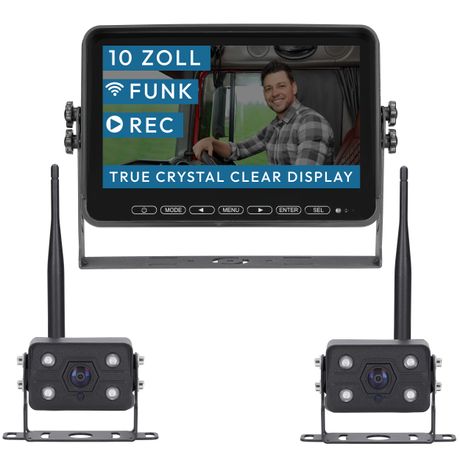 WIRELESS ELEMENT WIRED PRO HD XL | 2CAM The professional wireless set in XXL format



 WIRELESS ELEMENT WIRED PRO HD XL | 4CAM Complete system for seamless vehicle monitoring
  WIRELESS ELEMENT WIRED PRO HD XL Pioneering technology for effortless manoeuvring
 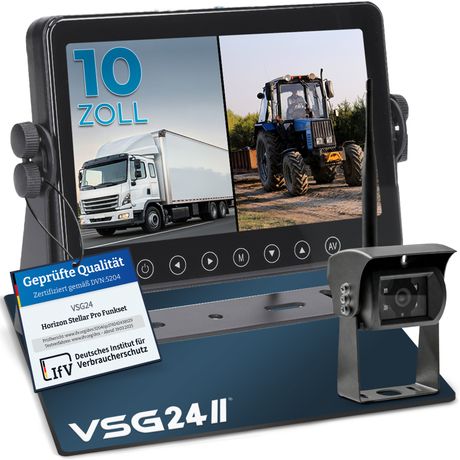 WIRELESS HORIZON STELLAR PRO XL | 1CAM High-end wireless system for the highest demands



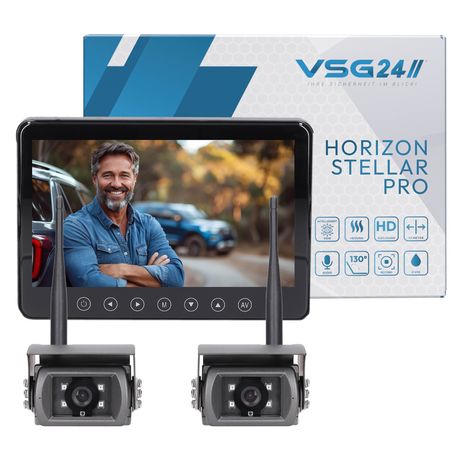 WIRELESS HORIZON STELLAR PRO XL | 2CAM Powerful wireless reversing system for experts
 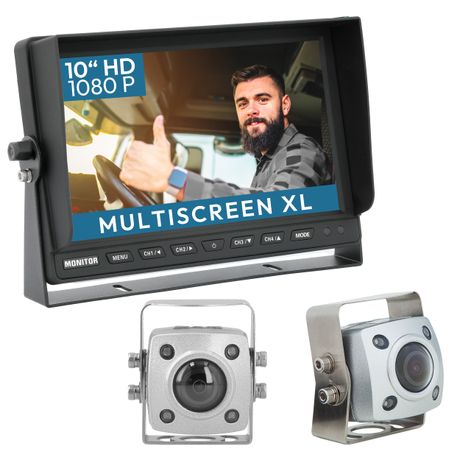 CABLE IP69K EXPERT XL | 2CAM Designed for the highest standards in visibility and safety



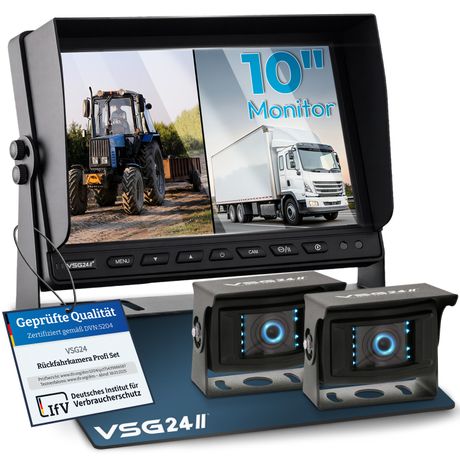 CABLE PROFI HD XL | 2CAM Enhanced visibility for professional control
 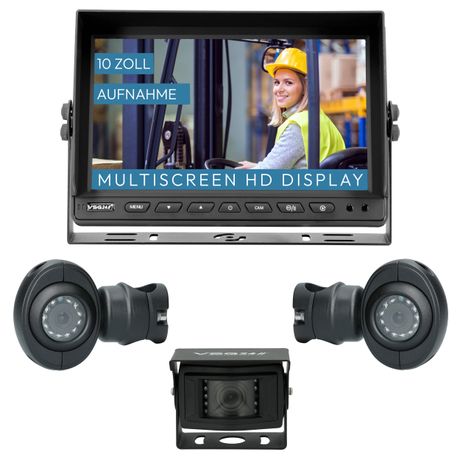 CABLE PROTECT PRO XL | 3CAM No chance for blind spots
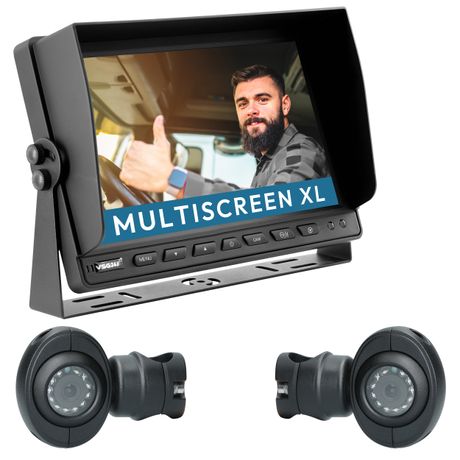 CABLE PROTECT XL | 2CAM Turn safely – no blind spots
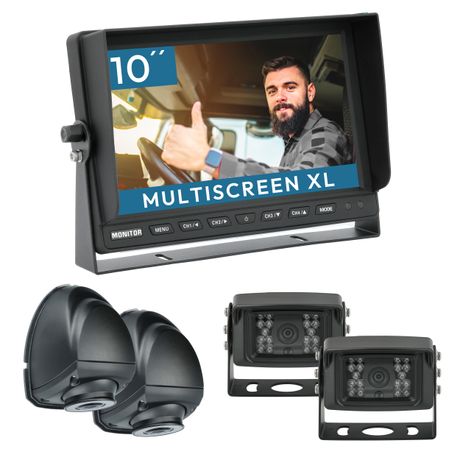 CABLE RUNDUMBLICK Uncompromising visibility in every manoeuvre
 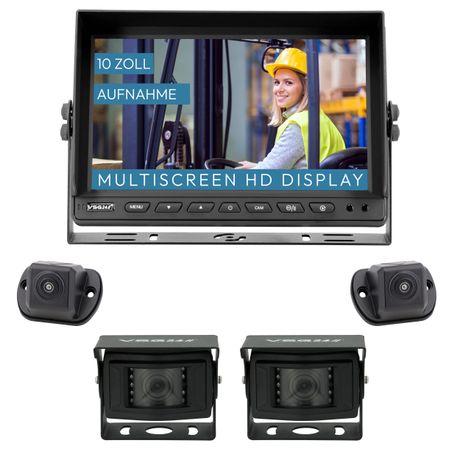 CABLE RUNDUMBLICK XL PROFI HD The navigation solution for specialists
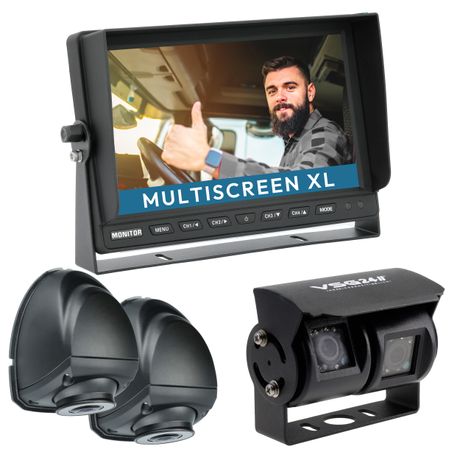 CABLE RUNDUMBLICK XL The smart combination of rear and side cameras

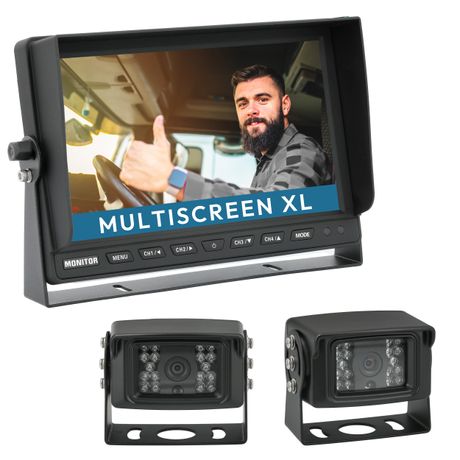 CABLE TRANSIT XL | 2CAM Maximum visibility – built for demanding use
 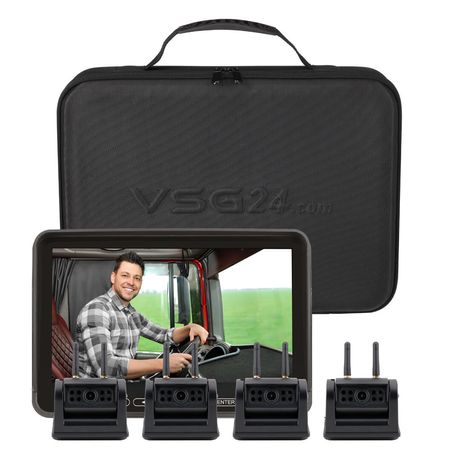 WIRELESS ELEMENT HD XL | 4CAM Strong magnetic hold – instantly installed – fully protected
  WIRELESS ELEMENT HD XL Flexible installation – drive with confidence
  WIRELESS ELEMENT WIRED PRO HD | 2CAM Reliable transmission even for large vehicles
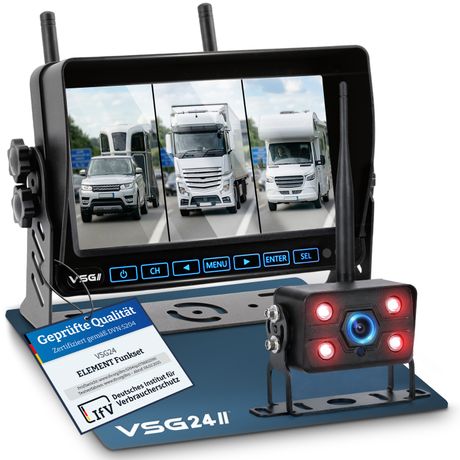 WIRELESS ELEMENT WIRED PRO HD Greater range – flexible antenna – perfect overview
 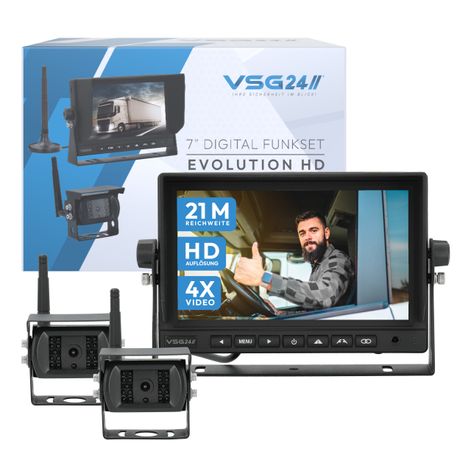 WIRELESS EVOLUTION HD | 2CAM Double safety – for vehicle and trailer
 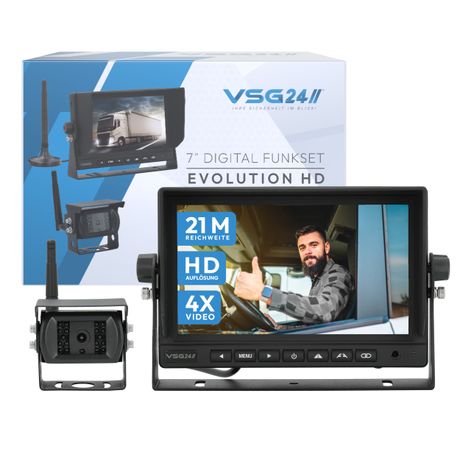 WIRELESS EVOLUTION HD Powerful wireless performance for professionals in HD
 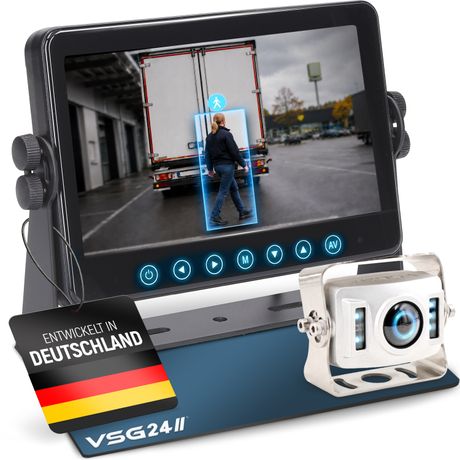 CABLE DETECT VISION Precise person detection with obstacle warning
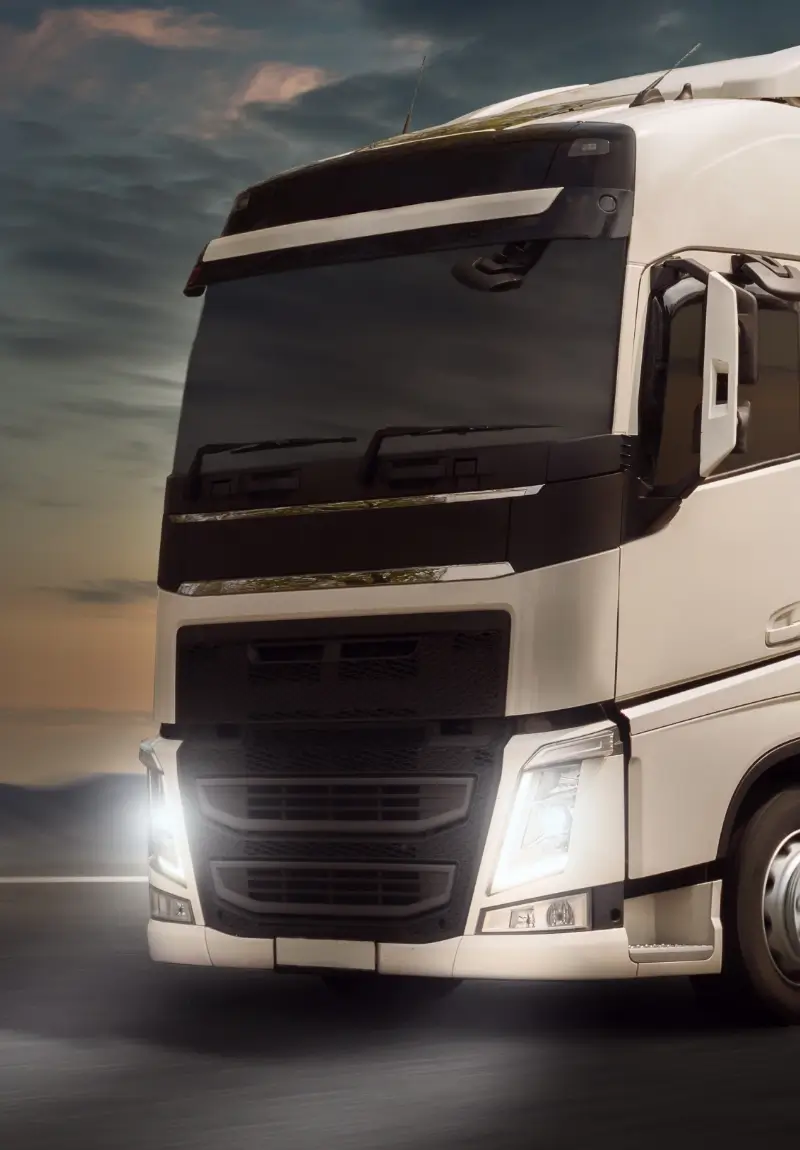
A reversing camera for trucks is a professional camera system for safe rear and surrounding-area monitoring on commercial vehicles in the 12–30V range. It supports drivers when manoeuvring at loading bays, in swap body operation, during trailer manoeuvres and in urban distribution traffic.
In heavy-duty applications, reversing systems are among the safety-relevant driver assistance systems on modern trucks. They reduce accidents, protect people in the surrounding area and lower the financial impact of manoeuvring errors.
Trucks differ significantly from vans or cars:
A simple retrofit camera from the car sector is not sufficient here. Truck reversing cameras must be robust, vibration-resistant, weatherproof and built for professional continuous use.
Especially in fleet operations, multi-camera systems substantially reduce minor manoeuvring damage – a decisive economic factor.
A single manoeuvring incident at a loading bay or trailer can quickly cost several thousand euros – plus downtime, organisational effort and potential insurance consequences.
A professional reversing system for trucks significantly reduces these risks. It improves visibility, increases driver reaction time and supports precise manoeuvres in daily operation.
Particularly in fleet use, the rule is: a single avoided damage event can fully pay back the investment in a truck reversing system.
A driver reverses onto a loading bay in the dark. A minimal misalignment leads to:
With a 7–10 inch monitor and clear HD visibility, the distance could have been checked precisely.
Reversing cameras on trucks are therefore not comfort – they are risk minimisation.
1-camera system
Suitable for smaller trucks with a fixed body. Focus on rear monitoring while manoeuvring.
2-camera system
Rear and side monitoring. Ideal for city traffic and distribution logistics.
4-camera system
Surround monitoring for tractor units and complex vehicle combinations. Maximum safety in tight manoeuvring situations.
For swap body operation and professional fleets, expandable wired systems are particularly stable. An overview can be found under wired reversing systems.
Many searches include:
Key criteria:
In urban distribution traffic or on depots, people are often close to the vehicle. An extended multi-camera system improves visibility in blind spots and actively supports drivers in safety-critical situations.
Reversing cameras on trucks are therefore not only a convenience feature, but part of a professional safety strategy.
In fleet operations, predictability matters. That’s why truck reversing systems are designed for long-term use:
Instead of having to replace complete systems, parts can be renewed selectively. This improves cost-effectiveness and sustainability.
In commercial use, response time is crucial. Enquiries are typically answered within 24 hours.
Technical advice supports you with:
In these cases, we recommend the categories reversing systems for vans, reversing systems for agriculture or reversing systems for cars.
If your vehicle runs in 24V continuous operation → professional multi-camera system.
If swap bodies are used → expandable system with multiple camera inputs.
If inner-city distribution traffic applies → additional side camera.
If you operate a fleet → robust, low-maintenance solution with spare parts assurance.
What is a truck reversing camera?
A professional camera system for safe rear monitoring on commercial vehicles in the 12–30V range.
Who is it suitable for?
Haulage firms, logistics companies, construction businesses and fleet operators.
When is it worthwhile?
For daily manoeuvring, trailer operation and higher safety requirements.
What should you look for?
Voltage range, robustness, expandability and long-term availability.
A truck reversing system protects drivers, people nearby and vehicles. It reduces manoeuvring damage, minimises downtime and increases operational safety.
What matters is that the system matches the vehicle configuration, electrical system and daily use.
The full overview of all solutions can be found in the main category Rear View Systems.
For an individual recommendation, the contact and advice page can help.
Discover tested reversing systems for trucks and safeguard your fleet sustainably.
Due to their design, trucks have large blind spots, especially to the rear and along the sides. Reversing systems are therefore among the most important safety-relevant driver assistance systems in daily truck operations. They help detect people, vehicles or obstacles at an early stage – particularly when manoeuvring, reversing or turning.
In city traffic, on depots or at loading bays, a reversing system significantly increases safety. For drivers, this means less stress and greater control; for companies, fewer incidents and less downtime.
For drivers, a high-quality reversing system primarily means relief. Instead of relying solely on mirrors or banksmen, they receive clear visual support. This reduces uncertainty, stress and physical strain.
Especially with frequent manoeuvring or tight situations, the sense of safety improves considerably. Drivers can manoeuvre more precisely, react faster and work more calmly – an important factor for concentration and long-term health.
Many truck-related incidents occur at low speeds: manoeuvring, reversing, turning. Reversing systems make exactly these critical areas visible.
By detecting people, vehicles or obstacles early, collisions can be actively avoided. Multi-camera systems in particular significantly reduce blind spots and support drivers in safety-critical situations.
A single manoeuvring or accident-related damage event can quickly cost several thousand euros – plus downtime, repair organisation and insurance implications. Reversing systems significantly reduce these risks.
For fleet operators, the investment often pays for itself through just one avoided damage event. In the long term, repair costs, downtime and insurance-related expenses are reduced – a clear economic advantage.
Yes. Reversing systems for trucks are specifically designed for 12–30V electrical systems and are therefore fully compatible with 24V operation. Cameras, monitors and control units are tailored to professional vehicle use.
VSG24 ensures that all components function reliably in truck operations – even during long duty cycles and with changing drivers.
For trucks, multi-camera systems are particularly beneficial. Rear, side and front cameras are often combined to cover all relevant areas.
Depending on the monitor, multiple cameras can be displayed simultaneously or individually. This significantly improves overall visibility and reduces blind spots. Wired systems provide maximum stability, while wireless cameras can be used as a supplement.
Yes. Many truck reversing systems are designed for continuous operation and can be used as an additional digital rear-view mirror. This is especially helpful with enclosed trailers or restricted rear visibility.
A permanently active monitor increases safety in flowing traffic and when changing lanes – without overwhelming the driver.
Truck systems must be extremely robust. Vibrations, dirt, rain and temperature fluctuations are part of everyday operation. That’s why VSG24 relies on high-quality cameras with IP67–IP69K ratings, vibration-resistant connectors and durable cables.
This robustness is essential for a long service life and low maintenance costs.
Yes. Many systems are modular and can be expanded at a later stage. Additional cameras, larger monitors or dedicated trailer solutions can be integrated.
A particular advantage at VSG24: some wired monitors also support wireless cameras, for example for trailers or swap bodies. This keeps the system flexible and future-proof.
Trucks vary significantly depending on body type, application and industry. Long-haul transport, distribution traffic or construction site operations each place different demands on the system.
VSG24 provides targeted advice on vehicle type, number of cameras, trigger control and expandability. The goal is a reversing system that supports drivers, prevents accidents and reduces costs in the long term – rather than just meeting a formal requirement.