0
0
Your shopping cart is empty.
Total: ${ $store.state.basket.data.itemSum | currency } (Gross) ${ $store.state.basket.data.itemSumNet | currency } (Net)
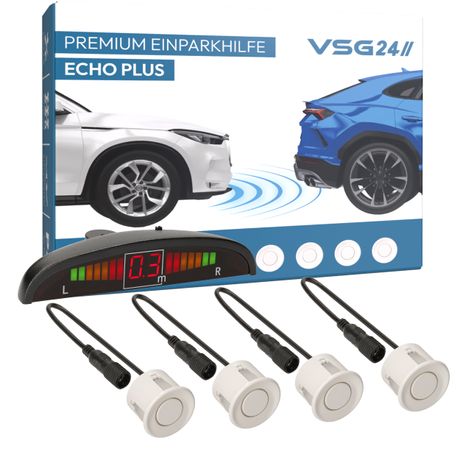 FRONT
FRONT 





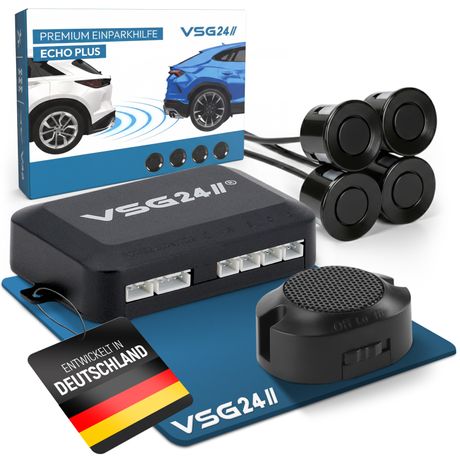 REAR ECHO PLUS Greater safety when reversing

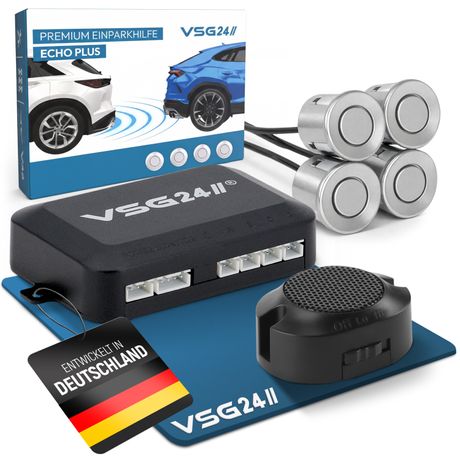 REAR ECHO PLUS Manoeuvre comfortably and safely

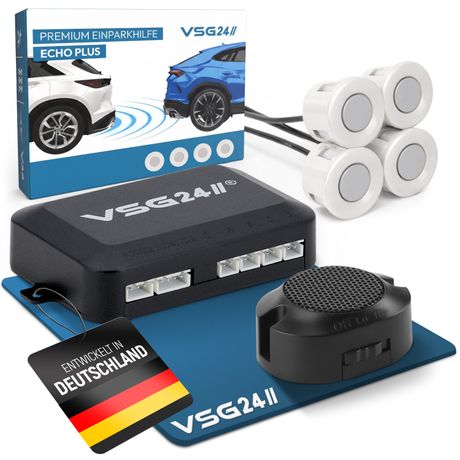 REAR ECHO PLUS Added comfort and safety when parking
 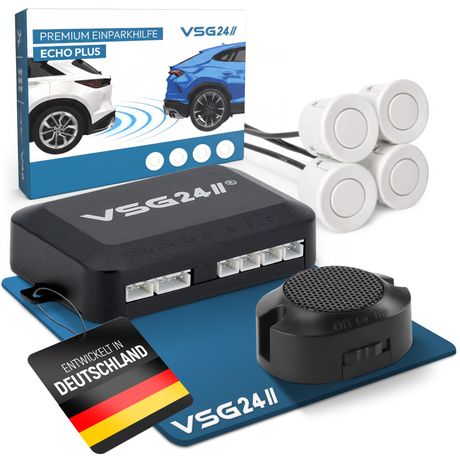 REAR ECHO PLUS Confident manoeuvring in tight spaces
 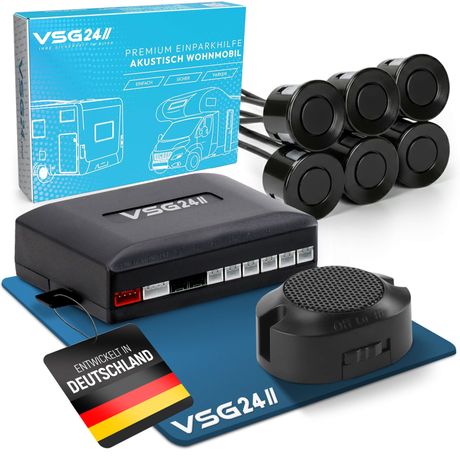 REAR ECHO PLUS WOHNMOBIL Enhanced safety for larger vehicles
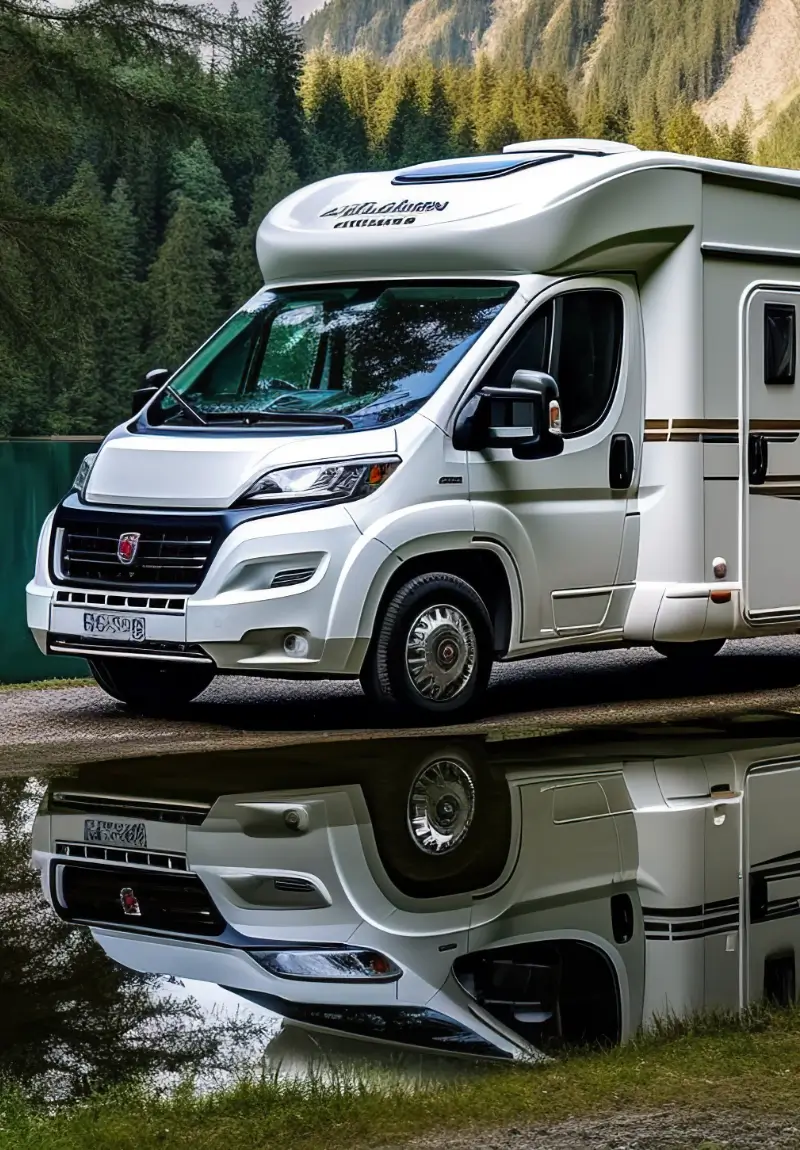
 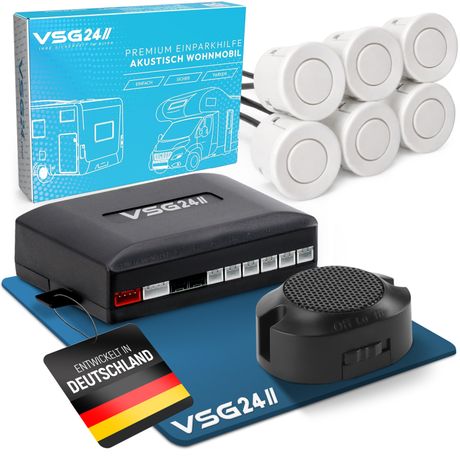 REAR ECHO PLUS WOHNMOBIL Motorhome set – manoeuvre large vehicles with confidence
 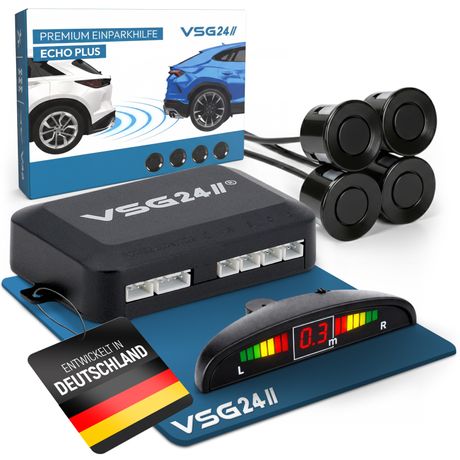 REAR ECHO PLUS Professional support when parking
 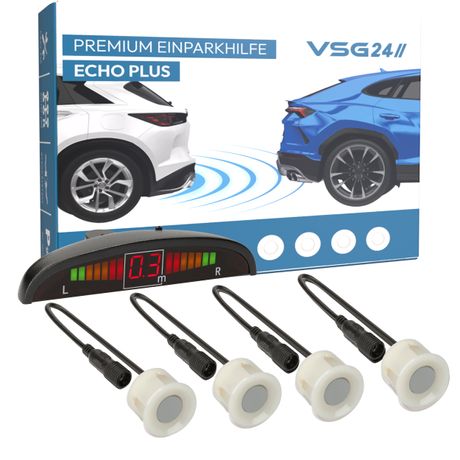 REAR ECHO PLUS Upgrade solution for stress-free parking
 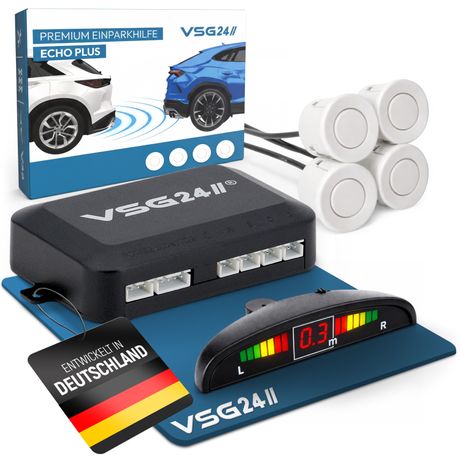 REAR ECHO PLUS Maximum visibility when reversing
 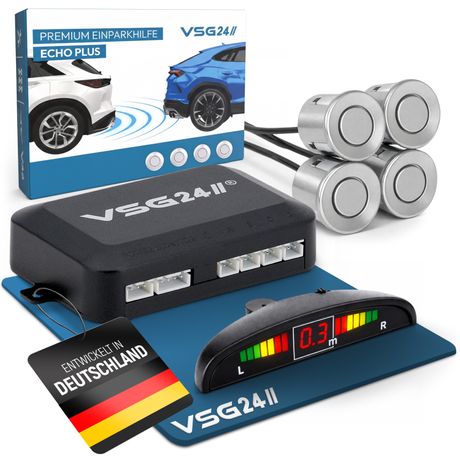 REAR ECHO PLUS Reverse and manoeuvre with confidence
 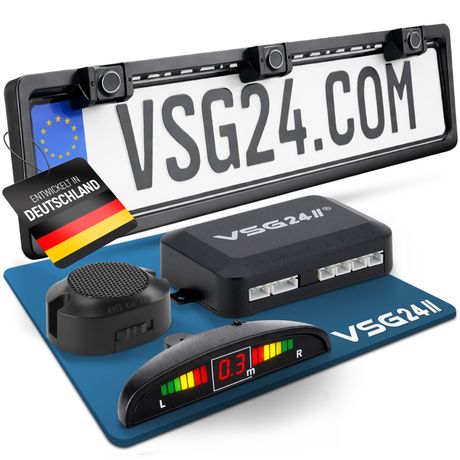 REAR ECHO PLUS Your upgrade for worry-free reversing

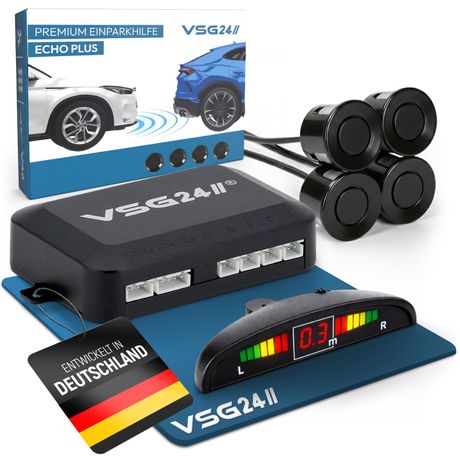 FRONT ECHO PLUS Clear visibility when manoeuvring forward
 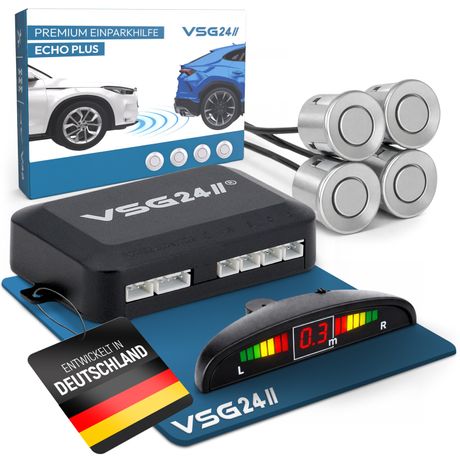 FRONT ECHO PLUS Extra safety for the front area
 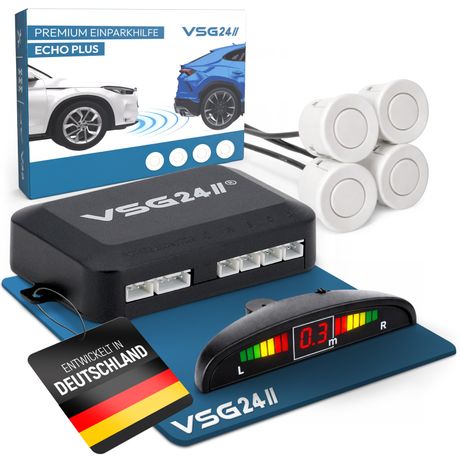 FRONT ECHO PLUS Enhanced safety when manoeuvring forward
 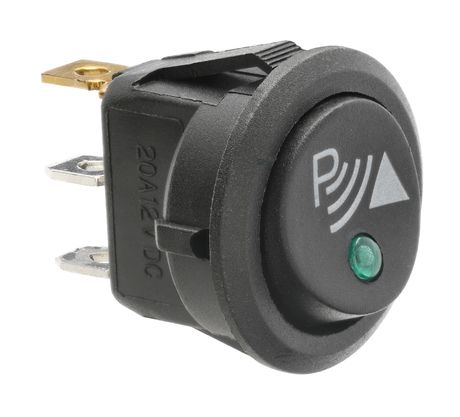 PARKCONTROL Activate your parking assistance system at the touch of a button
 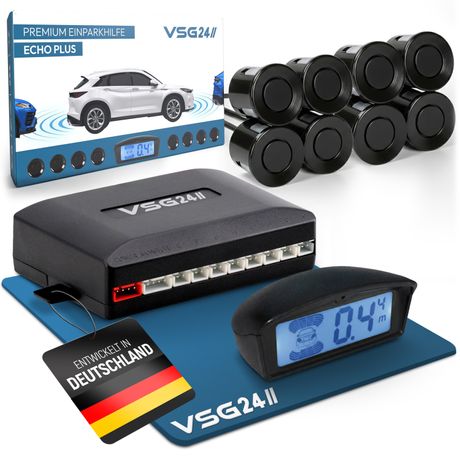 COMBI ECHO PLUS All-round protection when manoeuvring
 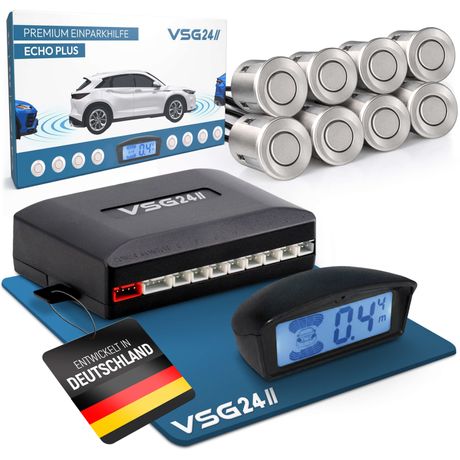 COMBI ECHO PLUS Precision when manoeuvring forward and reversing
 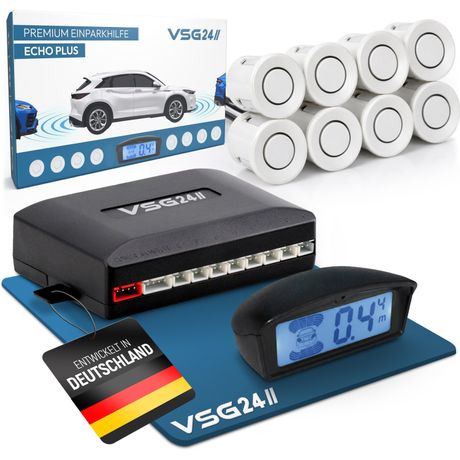 COMBI ECHO PLUS Complete 360° safety when parking and manoeuvring
 If you want to park your vehicle safely and avoid dents and scratches, a parking aid is a worthwhile upgrade. A parking aid is a retrofit system that can be installed in virtually any vehicle. Depending on the model, it provides either acoustic warnings, visual guidance, or both.
With a parking aid, the driver can detect obstacles via a display or receive an audible warning signal. These systems can be integrated into cars, motorhomes and vans, offering added safety and convenience when manoeuvring.
Retrofitting a parking aid is generally straightforward. Almost any vehicle can be equipped with a suitable system. Before choosing a model, it is important to understand the different types available. Parking aids are offered as:
Wireless models have the advantage that no signal cables need to be routed through the vehicle.
When purchasing a parking aid, you should consider whether you require sensors or a camera for the front and rear. The sensors are typically mounted in the bumper or near the impact absorbers. Inside the vehicle, a display or speaker provides visual or acoustic alerts. Many display units are available with colour screens.
Note: Displays vary in function. Some monitors show a live camera image of the parking area, allowing the driver to see both the front and rear surroundings. Other versions use a scale display with green and red bars to indicate the distance to an obstacle.
A parking aid can be retrofitted to almost any vehicle, regardless of whether it operates acoustically or includes a monitor. In all PDC (Park Distance Control) systems, the sensors are installed in the bumper.
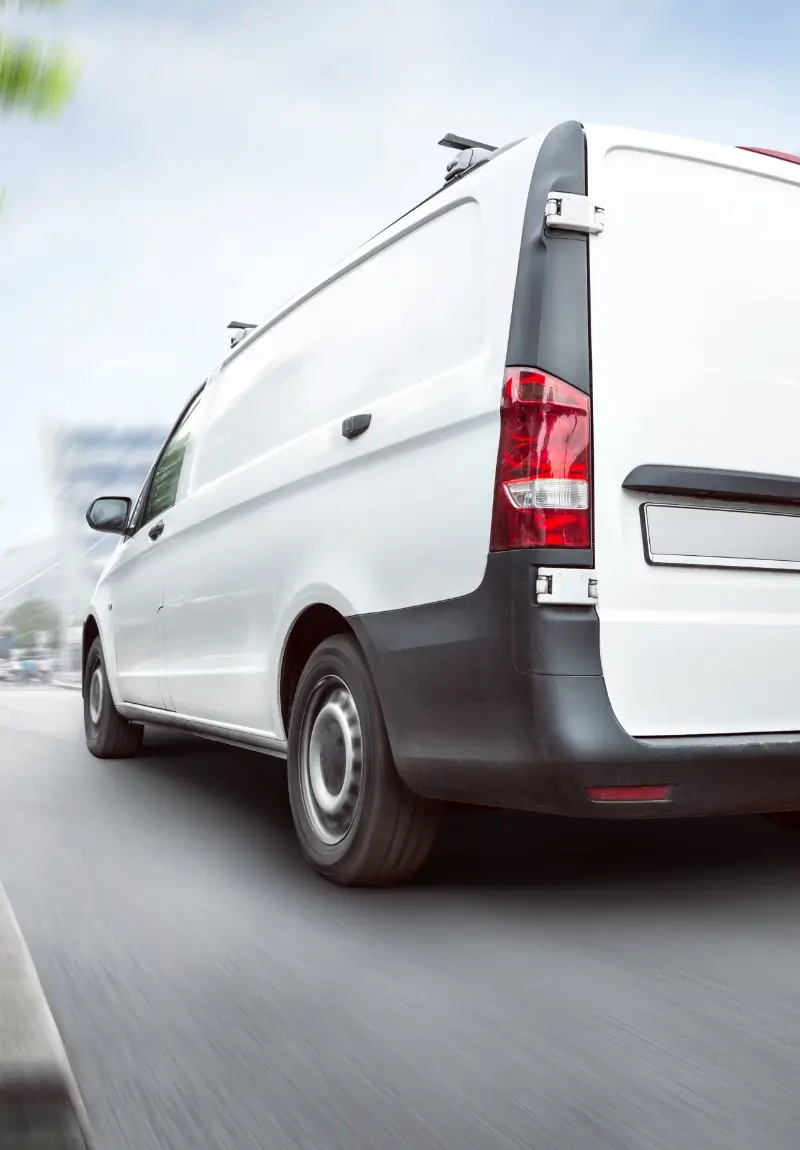
Parking aids are particularly recommended for vehicles with limited rear visibility or without a rear window, such as vans and motorhomes. HGVs can also be equipped with a parking aid. It is important not to confuse a parking aid with a reversing alarm, which is often fitted as standard on many HGVs.
Of course, parking aids are equally beneficial for cars, helping drivers judge distances more accurately.
A parking aid is primarily used when reversing or manoeuvring into a parking space. Most retrofit reversing camera systems are designed to activate when reverse gear is engaged. The supplied control unit is connected to the power supply of the reversing light. It can also be linked to the relevant gear selection so that the parking aid activates automatically.
The sensors are installed evenly across the bumper or on a number plate holder, depending on the system design and the number of sensors. Professional installation by a specialist workshop is recommended.
An acoustic parking aid warns the driver when the vehicle approaches an obstacle. As the distance decreases, the audible signal becomes more frequent. The increasing tone indicates that a collision is imminent.
Ultrasonic sensors for PDC are installed at the rear or front of the vehicle. These sensors emit ultrasonic signals to measure the distance to obstacles. The information is then transmitted to a speaker inside the vehicle, which generates the warning tone.
These systems do not include a reversing camera and are not connected to a monitor. Acoustic parking aids are suitable for vans, HGVs, cars and motorhomes. The sensors are mounted in the bumpers.
With e13 approval, these parking aids do not require registration or TÜV certification. Installation can be carried out independently or by a workshop.
Wireless parking aids are ideal for vehicles that do not have factory-installed sensor systems. They are designed specifically as retrofit solutions for cars, HGVs and vans. Caravans can also be upgraded with a wireless parking aid.
These systems use ultrasonic sensors mounted in the bumper to detect obstacles. The information is transmitted wirelessly. Audible signals alert the driver as objects are approached. In addition, a display shows green and red bars to provide visual distance guidance.
Wireless parking aids can be installed by the vehicle owner or by a specialist workshop. TÜV approval is not required. However, it is important to ensure correct connection to the appropriate gear so that the parking aid activates automatically. The control unit is installed in the boot and does not need to be mounted in the engine bay.
A wireless parking aid enables drivers to park safely and manoeuvre with greater confidence in everyday traffic.
An alternative to a purely acoustic system is a parking aid with a display. These models offer enhanced visual feedback and are suitable for HGVs, cars, vans and motorhomes.
In retrofit systems with a display, a vehicle graphic shows the position of detected obstacles. An LED display also indicates the exact distance to the object. This allows the driver to visually confirm how close the vehicle is to a potential hazard.
Systems with a larger display can differentiate between the left and right PDC zones. The display-based parking aid is integrated with sensors in the front and rear bumpers. The system is then connected to the control unit installed inside the vehicle. The LED or LCD display is mounted within the driver’s field of vision for clear visibility.
VSG24 parking sensor systems are generally suitable for any 12-volt vehicle – regardless of make or model. The only requirement is an available 12 V power source, e.g. from the reversing light, brake light or ignition live.
Whether it’s a small hatchback, SUV, van or motorhome: with different variants (rear, front, front + rear, audible or with a display), almost any vehicle can be retrofitted sensibly. That’s exactly why parking sensor systems are among the most flexible driver-assistance upgrades for everyday driving.
VSG24 offers parking sensor systems for the rear, the front, or a combined front and rear setup. Depending on your needs, systems are available with an audible buzzer only or with an additional display.
The design also varies: classic bumper installation or discreet solutions integrated into a number plate holder. This means a parking aid can be visually unobtrusive or especially convenient – depending on preference and vehicle type.
Yes. VSG24 parking sensor systems can easily be operated with 2 or 3 sensors per bumper. You don’t necessarily have to connect all 4 sensors.
Four sensors provide the best all-round detection, but especially on narrower vehicles or in specific installation situations, fewer sensors are often sufficient. This makes the systems particularly flexible – including for individual retrofit requirements.
Yes, the sensors can be painted to match the vehicle colour. It’s important that painting is done using a spray method.
Applying paint too thickly – for example with a brush or touch-up pen – can impair performance. In particular, the inner recess of the sensor should remain clear so the ultrasonic measurement works reliably. When painted correctly, both appearance and function are fully maintained.
In principle, the sensors can also be fitted at different heights. However, it is important not to go below a minimum height of 28 cm.
This installation height ensures obstacles are detected correctly and helps prevent false readings. This is an important point, especially for lowered vehicles or unusual bumper shapes.
Yes. Parking sensor systems can also be used on vehicles with a tow bar. It is important that the inner sensors are at least 25 cm away from the tow bar so it isn’t permanently detected as an obstacle.
If you often drive with a trailer, it’s also recommended to use the supplied ON/OFF switch to deactivate the rear sensors specifically. For occasional use, muting is usually sufficient.
Yes, sensors can also be installed on the sides. This is particularly useful for detecting obstacles early when turning in or manoeuvring.
If you fit all four sensors in the classic rear position, you get the best rear-area coverage. Side installation is an addition for specific driving situations – for example in narrow city streets or tight driveway entrances.
Yes, without any restrictions. The sensors are designed for normal vehicle use, including automatic car washes.
The only important point is correct installation. Then neither high-pressure water nor brushes are a problem.
In most cases, a single sensor is causing the issue. Troubleshooting is straightforward:
This clearly identifies the faulty sensor. In this case, VSG24 Customer Service will help quickly and easily – often with a targeted replacement rather than a complete system swap.
Some vehicles have CAN-Bus or PWM-controlled circuits. In these cases, the reversing light is not powered continuously but is pulse-controlled. This can mean that the parking sensor system does not work correctly with the engine running or reacts irregularly.
Not every parking system includes a CAN-Bus filter or interference suppression filter as standard. However, VSG24 offers these filters separately as accessories, so vehicles with a pulse-controlled reversing light can also be equipped reliably.
Whether a filter is required depends on the vehicle type and electrical architecture. If you are unsure, it is recommended to contact VSG24 Support briefly to choose the right solution and ensure interference-free operation.
An additional switch allows you to switch the parking aid on and off as needed, or to activate only certain sensors (e.g. the front ones).
This is particularly practical when towing a trailer or in specific driving situations. The switch increases ease of use and makes the parking aid even more suitable for everyday use.
Parking sensor systems may seem straightforward at first glance – but in the details, installation height, number of sensors, power connection and vehicle type determine whether you’re satisfied or frustrated.
VSG24 provides practical, honest advice so the parking aid fits both the vehicle and everyday driving needs. This creates safety, convenience and a system that remains reliably functional in the long term.